
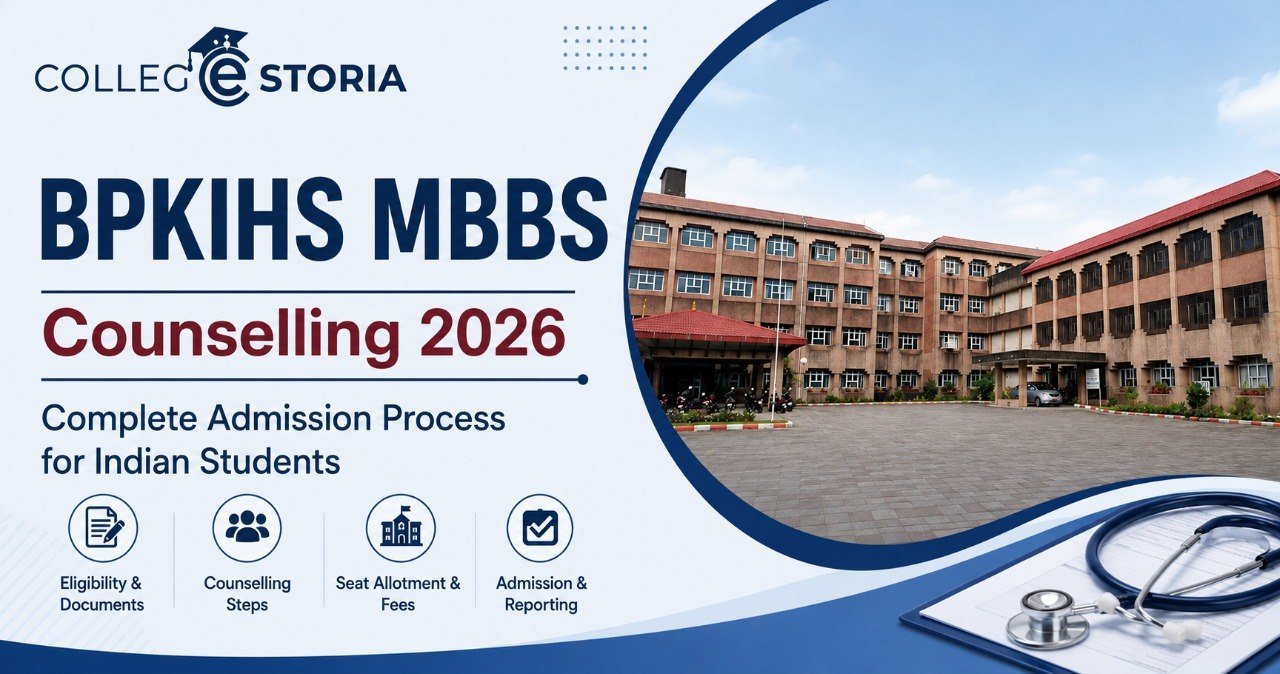
BPKIHS MBBS Counselling 2026: Complete Admission Process for Indian Students
Every year, a good number of NEET qualifiers start looking beyond Indian borders once the counselling rounds get tighter than expected. Nepal comes up a lot in these conversations, and one name keeps surfacing more than most: BPKIHS. If you’re exploring MBBS Admission in Nepal, understanding how this particular institute actually works, admissions-wise, saves a lot of confusion later.
So what makes BPKIHS different from the usual overseas MBBS route? Quite a bit, actually.
What Exactly Is BPKIHS?
BP Koirala Medical College Dharan, officially known as B.P. Koirala Institute of Health Sciences, is a public, autonomous health sciences institute located in Dharan, in Nepal’s Koshi Province. It isn’t a private setup chasing international students for revenue. It runs as a genuine academic and hospital institution, blending medical education with active clinical care, which honestly shows how the programme is structured.
For Indian families researching MBBS in Nepal, this university tends to stand out because of its public-institution backing, an established teaching hospital attached to it, and its closeness to the Indian border. That last point matters more than people initially realise. Dharan sits close enough to India that travel, visits, and even emergencies feel far less overwhelming than sending a child to somewhere genuinely far away.
How Admission Actually Works
Here’s where a lot of assumptions go wrong. People sometimes think there’s a direct-admission shortcut into BPKIHS. There isn’t. Admission runs through Nepal’s Medical Education Commission, using what’s called the MECEE-BL application and matching system. It’s centralised, rank-based, and doesn’t leave room for backdoor entries or informal arrangements.
For Indian applicants, the starting point is still NEET-UG. You need to have cleared it with the required percentile, generally 50th percentile for the general category and the 40th for SC/ST/OBC candidates, matching the National Medical Commission’s existing regulations. Once that’s cleared, the actual Medical Admission Counselling in Nepal process kicks in through the MEC’s matching system rather than a walk-in interview or a college-specific test.
This is genuinely reassuring for a lot of parents. It removes the guesswork and the anxiety around “will the college even honour what we were promised,” since the process runs through a governmental matching mechanism rather than individual institutional discretion.
Seat Intake and What’s Actually Available
For the current MECEE-BL cycle, BPKIHS has listed around 100 MBBS seats, with a meaningful chunk, roughly 75, allocated as scholarship seats. That’s a fairly generous split compared to several other Nepal-based institutes, and it’s part of why BPKIHS keeps coming up in serious counselling conversations rather than just casual browsing.
Naturally, seat numbers shift a bit year to year depending on regulatory updates, so it’s worth verifying live numbers before finalising anything.
You may also like:
Fees and What Families Should Actually Budget
Cost is where most families spend the bulk of their research time, understandably. The annual tuition at BPKIHS tends to fall somewhere between four to six lakh rupees, though it varies depending on the year and any policy revisions. Factor in hostel, food, and other living costs, and the full six-year programme typically lands in the twenty-five to thirty-five lakh range overall.
Compared to a lot of private MBBS options abroad, this feels considerably more grounded, especially given the public-institution backing and recognised academic standards attached to it.
Recognition and What It Means for Your Future
This is probably the single most important box to tick before committing anywhere. BPKIHS holds recognition from the National Medical Commission in India, meaning graduates become eligible to sit for the NExT exam (which has now replaced the older FMGE) to practice medicine within India after completing their degree abroad.
Without this recognition, none of the rest matters much. Fees, seat count, campus quality, all secondary if the degree doesn’t eventually let you practise where you actually intend to. Before finalising any Nepal-based MBBS option, this specific verification deserves careful attention rather than being taken on faith from a brochure.
Why Choice Filling and Strategy Still Matter
Even within a matching-based system like MECEE-BL, the way you approach your options isn’t purely mechanical. Understanding realistic cutoff patterns, how seat matching typically plays out, and where BPKIHS genuinely fits your profile compared to other Nepal-based colleges requires actual research rather than guesswork built on forum posts and rumours.
This is exactly the kind of decision where Medical Admission Counselling in Nepal experience becomes genuinely useful, even for a Nepal-bound application, because so much of the underlying logic, rank positioning, realistic expectations, and documentation timelines carries over from how domestic counselling works.
Getting It Right With CollegeStoria
Choosing between staying within India through repeated counselling rounds or exploring a recognised option like BPKIHS in Nepal is rarely a simple call, and it shouldn’t be made on WhatsApp forwards or half-verified claims. CollegeStoria has guided students and families through exactly this kind of decision, helping them understand real eligibility, actual costs, and genuine recognition status before committing to any path abroad. If BPKIHS or a similar option in Nepal is on your radar, getting accurate, verified guidance early on makes the entire process considerably less stressful, and considerably more likely to end where you actually intended it to.