
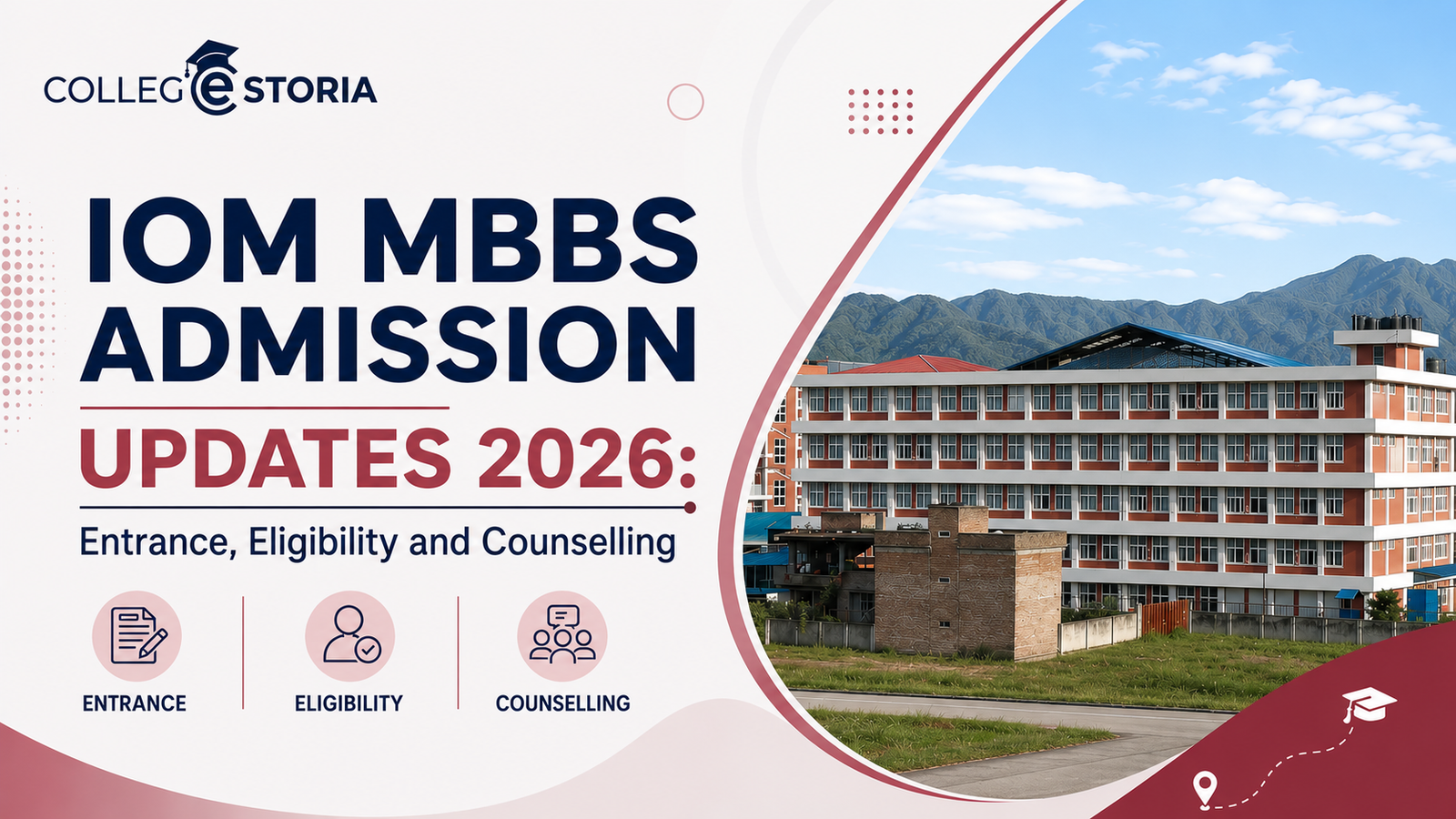
IOM MBBS Admission Updates 2026: Entrance, Eligibility and Counselling
Ask around in medical admission circles about Nepal, and one name comes up almost immediately: IOM. Not because it’s flashy or heavily advertised, but because it’s genuinely old, genuinely respected, and genuinely difficult to get into. If you’re weighing MBBS Admission in Nepal as a serious option rather than a backup plan, IOM deserves a closer look before you rule it in or out.
Let’s actually unpack what this institute is and what getting in looks like for Indian applicants in 2026.
What IOM Actually Is
IOM Medical College in Nepal, formally the Institute of Medicine, sits in Maharajgunj, Kathmandu, functioning as one of the technical institutes under Tribhuvan University. It’s been running since 1972, making it Nepal’s oldest and arguably most established medical education body, predating most of the private medical colleges that dominate a lot of overseas MBBS conversations today.
This isn’t a college chasing international enrolment for revenue. It’s a public institution with a strong academic reputation and a teaching hospital, Tribhuvan University Teaching Hospital, attached directly to it. Recognition-wise, it holds backing from the Nepal Medical Council and the World Health Organisation, both of which matter enormously once you start thinking about practising back in India later.
For families exploring IOM Medical College Kathmandu specifically, the appeal usually comes down to three things: legacy, academic rigour, and genuinely strong clinical exposure through TUTH.
How Admission Actually Works
Here’s where people often get tripped up. IOM doesn’t run a separate entrance test of its own for foreign applicants. Admission flows through Nepal’s Medical Education Commission and its combined entrance examination system, generally referred to as MECEE. Indian candidates go through this centralised route rather than applying directly to the campus.
Before even reaching that stage, though, eligibility needs sorting. Applicants typically need a minimum of 50% marks across Physics, Chemistry, and Biology in their 10+2, along with a qualifying NEET-UG score. And this is where IOM separates itself sharply from a lot of other Nepal-based options.
Why the Competition Level Is Different Here
Unlike several private Nepal medical colleges where NEET qualification alone might get you considered, IOM’s paying seats for Indian students are genuinely limited, and competitive scores tend to sit meaningfully higher, often in the 450-plus NEET range for a realistic shot, though this shifts depending on the year and category. Medical Admission Counselling in Nepal for IOM specifically isn’t a volume game. It’s a scarcity game.
That’s an important distinction for families to internalise early. The seat crunch isn’t about the qualification bar being unreasonable. It’s about a genuinely small number of seats set aside for international candidates within an institution that prioritises its domestic intake first.
Fees and What the Investment Actually Looks Like
This is one area where IOM quietly outperforms a lot of the more commercially marketed Nepal options. Because it’s government-backed rather than privately run, total costs across the programme tend to land considerably lower than private alternatives, broadly estimated in the sixteen to twenty lakh range over the full course, though exact figures should always be confirmed through IOM or the current MEC notice before anyone commits financially.
Compared to private medical colleges charging significantly more for a similar degree, that gap is worth taking seriously, provided the seat can actually be secured.
Documentation and What Gets Verified
Once selected through the MEC process, candidates need to complete document verification in person at the Maharajgunj campus. This typically includes Class 10 and Class 12 mark sheets and certificates, along with meeting the minimum subject-wise percentage requirement. First-year tuition needs to be paid to confirm the seat, after which enrolment and orientation details follow.
None of this is unusual by itself. But missing a verification window or submitting incomplete paperwork can knock a candidate out of contention entirely, regardless of how strong their NEET score was.
You may also like:
Why This Requires More Than a Quick Google Search
MBBS in Nepal conversations online tend to blur together IOM, BPKIHS, and a dozen private colleges as though they’re interchangeable. They aren’t. IOM’s seat scarcity, its verification process, and its fee structure all behave differently from most private institutions, and a lot of the generic information floating around doesn’t clarify that distinction well enough.
Given how limited and specific IOM’s foreign-student intake actually is, going in with verified, current information isn’t optional. It’s the difference between a wasted application cycle and a genuinely well-placed one.
Making the Right Call With CollegeStoria
IOM represents one of the strongest academic options in Nepal for Indian MBBS aspirants, but only for candidates who go in with realistic expectations and accurate, current information rather than assumptions carried over from other colleges. CollegeStoria has helped students navigate exactly this kind of nuanced decision, verifying real eligibility, current fee structures, and actual seat availability before anyone commits time or money to an application. If IOM is genuinely on your radar for 2026, getting that clarity early is what turns a long shot into an informed decision.